
After my house flooded one year, I had to rethink how I used my basement. Once everything was torn out and dried, I decided to rebuild the storage from scratch instead of buying metal shelving. That decision turned into a small learning journey. I have now built four full sets of basement shelves and each one has been better and cheaper than the last. The first set cost far more than it should have, mostly because I overbuilt and used materials that were unnecessary. Experience quickly fixed that.
Because these shelves live in a basement, strength and stability mattered more to me than looks. I started by anchoring the rear vertical posts directly to the concrete wall using Tapcon concrete screws. This keeps the shelves from racking side to side and gives the whole structure a solid reference point. The screws are doing positioning work, not weight bearing, which turned out to be an important distinction.
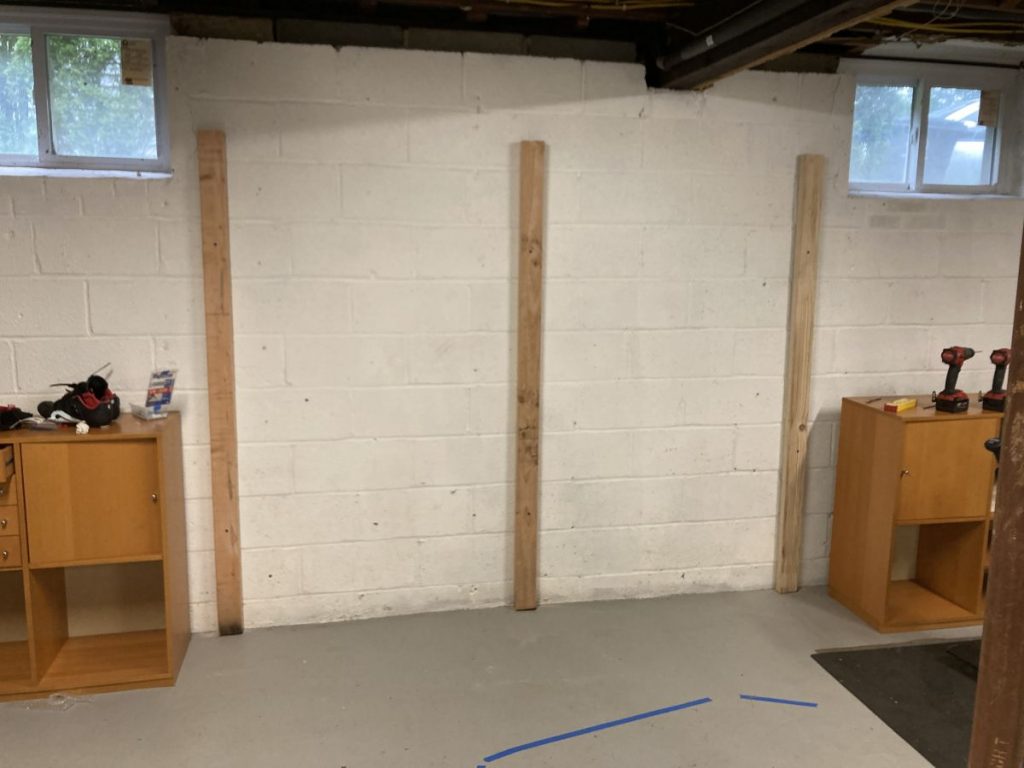
Rather than hanging the shelves off fasteners, I built in mechanical support so gravity does the work. I added 2×4 blocking running up the posts from the bottom, sistered directly to the corner uprights. Each block supports the shelf above it, transferring the load straight down into the posts and ultimately the floor. This approach takes stress off the screws and makes the shelves feel rock solid even when fully loaded with bins, tools or paint cans.
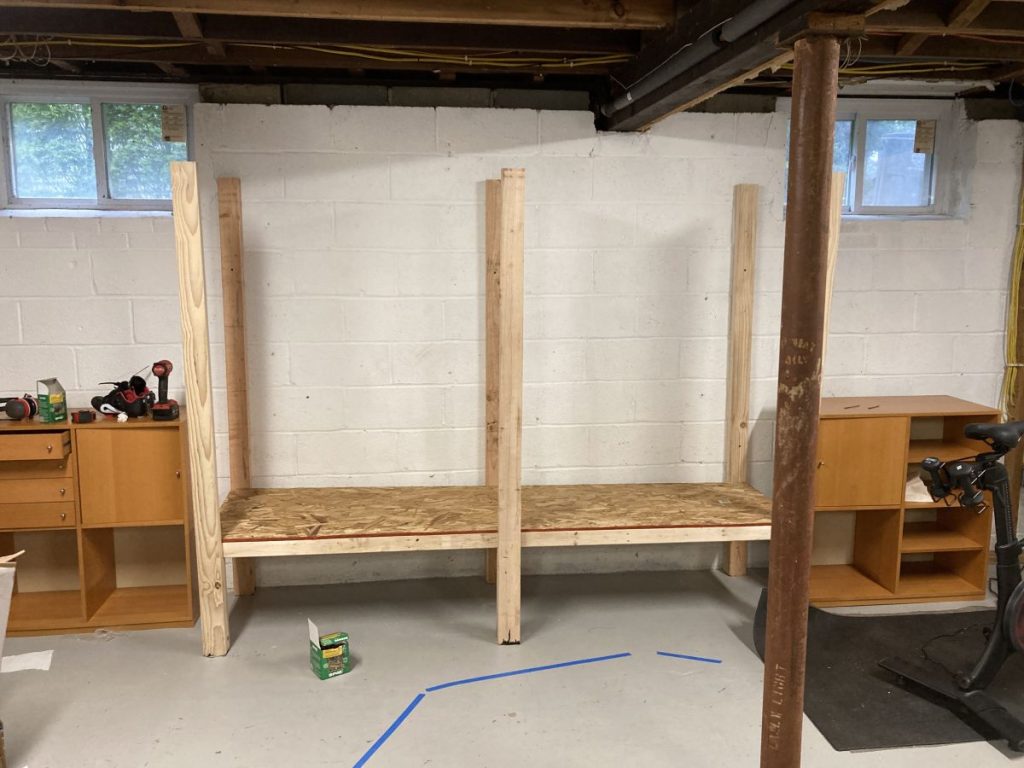
For the shelf frames themselves, I initially used 2×4 lumber but quickly realized it was overkill. On later builds I switched to 2x3s which were more than strong enough while saving money and reducing weight. The shelves rest on the 2×4 supports, sometimes called cripples, which means the frame is not relying on fasteners to hold weight. Everything is stacked and supported rather than suspended.
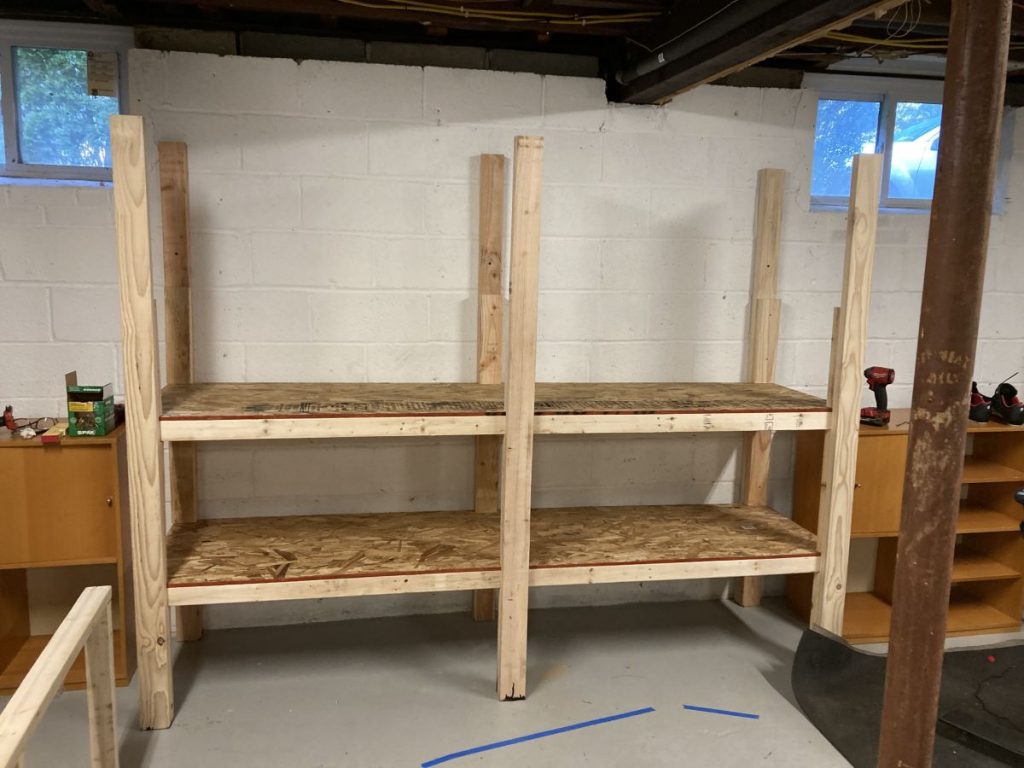
One of the biggest cost savings came from rethinking the shelf surface. At first I used cabinet grade plywood which looked nice but was completely unnecessary for a basement storage area. I now use OSB for all shelving surfaces. It is significantly cheaper, plenty strong for storage and easy to replace if it ever gets damaged. In a space where function matters more than finish, OSB just makes sense.
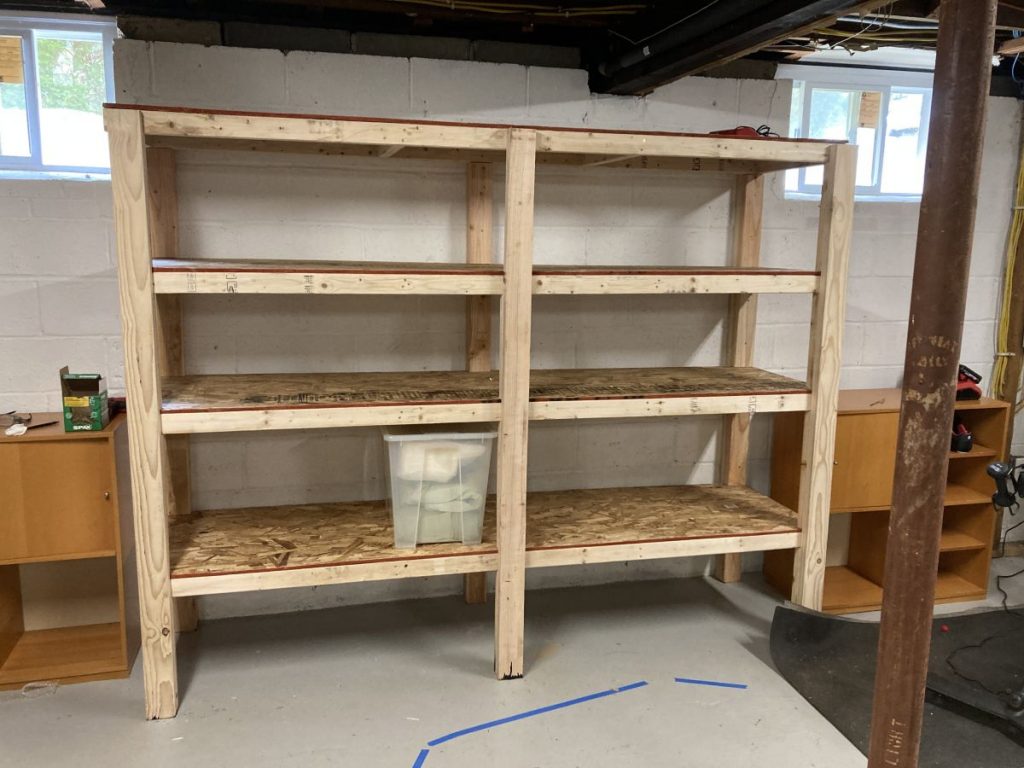
After building several versions of these shelves, the biggest lesson was that strength comes from design, not from throwing more lumber or more expensive materials at the problem. By letting weight travel straight down and using materials appropriate to the job, you can build shelves that are sturdy, long lasting and far more affordable than store bought options.