
A common questions is how to color match a new piece of furniture to something you already own. It is a real world problem. Furniture is rarely bought all at once, wood species change, finishes age, and suddenly you are trying to make a brand new table feel like it belongs with chairs that have been in your home for years.
That was exactly my situation. I had an existing set of dining chairs that I loved, and I was refinishing a table that needed to live comfortably alongside them. Buying a pre mixed stain off the shelf was not going to get me there. The color was close, but not close enough. That is where mixing stains becomes vert useful.
There are a few different ways to approach color matching, depending on how much control you want and what materials you are comfortable working with.
One option is to make your own Danish oil in any color you want. This gives you a lot of flexibility and a very forgiving finish. A simple homemade Danish oil is made by mixing one part linseed oil, one part varnish, and one part paint thinner. Once that base is mixed thoroughly, you can add artist oil paint a little at a time until you reach the color you want. The key is to go slowly and test often. Artist oils are highly concentrated, so a small amount goes a long way. This approach works especially well when you want the color and the finish to be applied in one step, and it is easy to adjust as you go.
Another approach is to mix commercial stains together. This can be done with either oil based stains or water based stains, but they must match. Oil based stains should only be mixed with other oil based stains, and the same goes for water based products. Once combined, the stain needs to be mixed very thoroughly so the pigments are evenly distributed. I like to stir, let it sit for a few minutes, and stir again before testing. Always test on scrap wood from the same species as your project, because the wood itself has as much influence on the final color as the stain does.
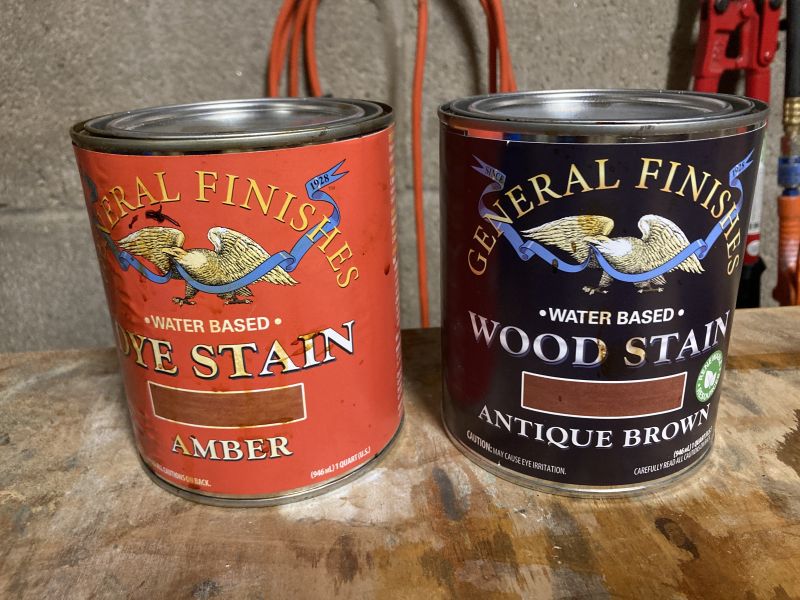
In my case, I used a combination General Finishes Stains one of an amber stain and a brown stain to recreate the slightly warm, orange leaning tone of our existing dining chairs. Straight brown was too flat, and straight amber was too bright. Blending the two gave me warmth without pushing too far into orange territory. Even then, I knew I would never get a perfect match. The table was made from poplar, and the chairs were a different wood entirely. Poplar has its own personality when it comes to staining, and it simply does not behave the same way as many hardwoods.
What mattered more than a perfect match was that the pieces felt right together. The tones were in the same family, the warmth was consistent, and nothing looked out of place. In the end, the table and chairs complement each other rather than competing for attention, and that is often the real goal of color matching.
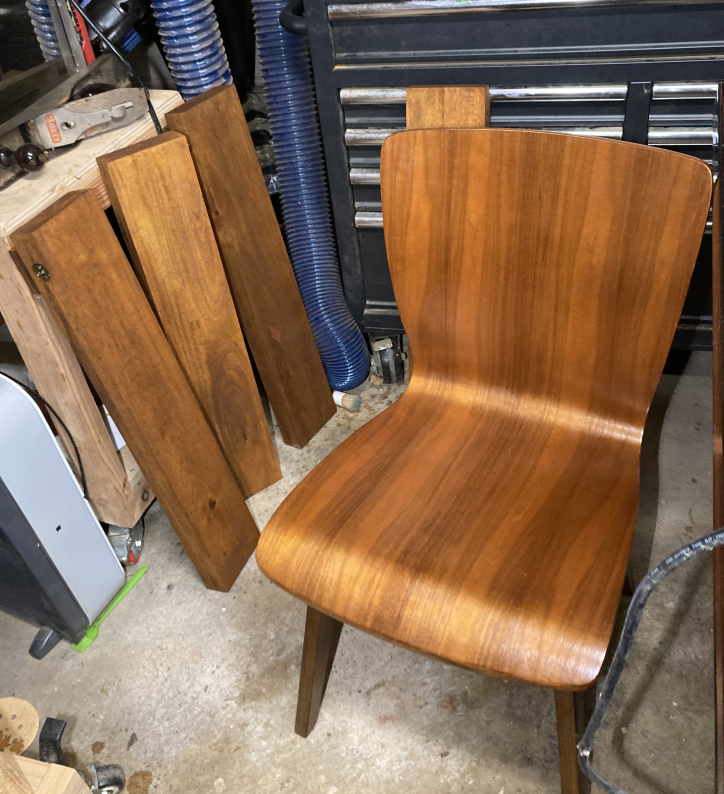
Mixing stains takes a little patience, but it opens up a huge range of possibilities. Instead of settling for what is available on the shelf, you can tune a color to your space, your wood, and your existing furniture. Once you get comfortable testing and adjusting, it becomes one of the most valuable tools in your finishing process.